
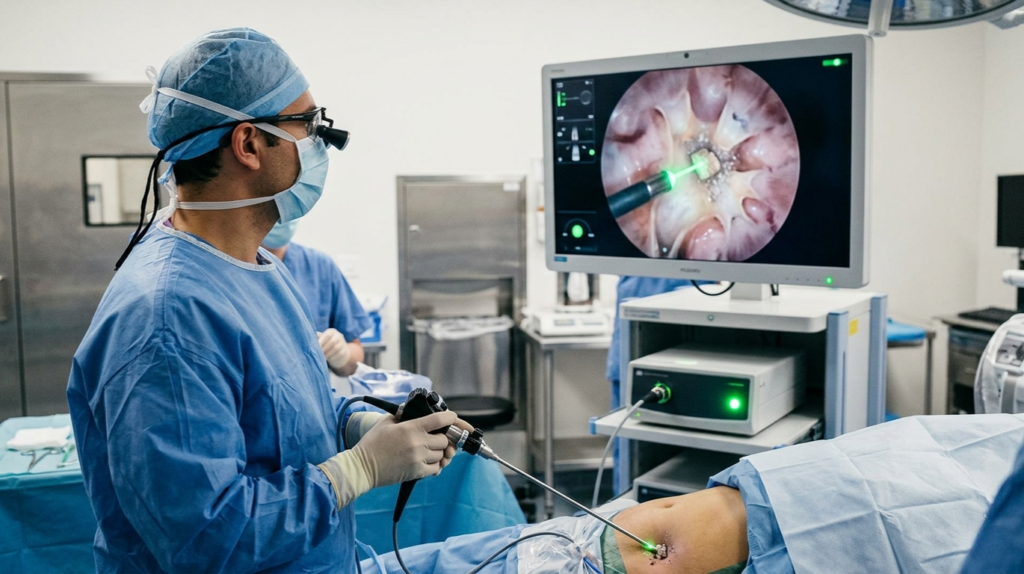
Laser Treatment for Kidney Stones: Is It Safe and Effective?
Kidney stones are a common yet painful urological condition affecting millions of people every year. With advancements in medical technology, traditional open surgeries are now being replaced by minimally invasive procedures like laser treatment for kidney stones, also known as laser lithotripsy. But many patients still ask: Is laser treatment safe? Is it effective?
In this detailed guide by Dr. Dilip Kumar Mishra, often regarded as the best urologist in Agra, we will explore everything you need to know about laser kidney stone treatment.
What is Laser Treatment for Kidney Stones?
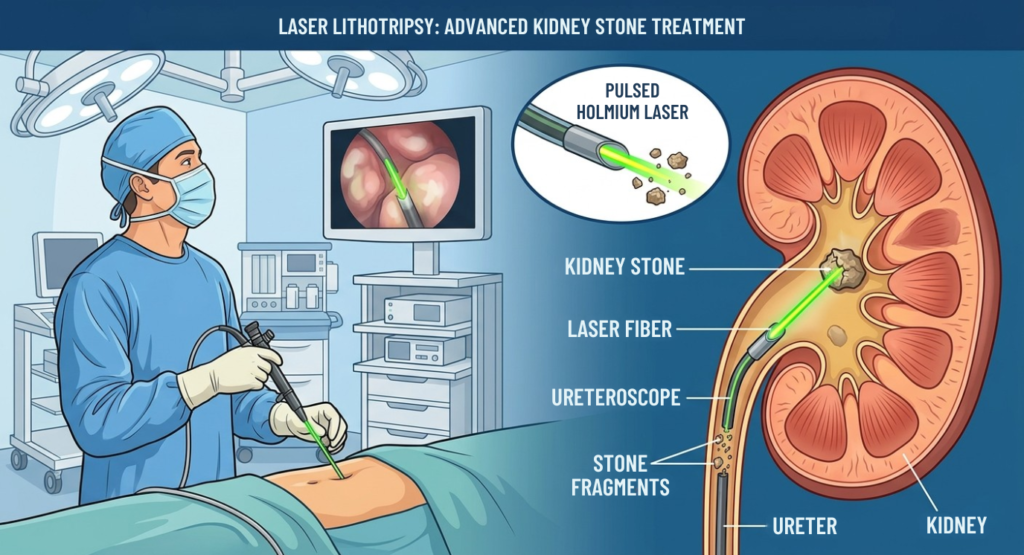
Laser treatment, or laser lithotripsy, is a modern procedure used to break kidney stones into tiny fragments using a high-energy laser beam.
A thin instrument called a ureteroscope is inserted through the urinary tract to locate the stone. Once identified, a laser—commonly the Holmium:YAG laser—is used to break the stone into dust-like particles that can pass naturally through urine. (PubMed)
Unlike traditional surgery, this procedure involves no cuts or stitches, making it a preferred choice for both doctors and patients.
How Does Laser Lithotripsy Work?
The procedure typically follows these steps:
- A small scope is inserted through the urethra into the kidney.
- The stone is visualized using a camera.
- A laser fiber is directed at the stone.
- The stone is broken into fine particles or small fragments.
- Fragments are either removed or passed naturally.
Advanced techniques like “dusting” reduce complications and improve efficiency by turning stones into fine particles that exit the body naturally. (PMC)
Is Laser Treatment Safe?
Yes, laser treatment for kidney stones is considered highly safe when performed by an experienced urologist.
Why It’s Safe:
- Minimally invasive: No surgical cuts
- Precise targeting: Laser focuses only on the stone
- Reduced tissue damage: Surrounding tissues remain largely unaffected
- Low complication rates
Modern laser systems are designed to provide high precision with minimal damage to surrounding tissues, enhancing overall patient safety. (The Times of India)
Studies also show that laser lithotripsy has been used safely for over 20 years and continues to evolve with improved outcomes. (PubMed)
Is Laser Treatment Effective?
Laser lithotripsy is not only safe but also extremely effective.
Key Benefits:
- High stone-free rates
- Works on stones of different sizes and locations
- Faster recovery time
- Lower recurrence risk (with proper care)
A large meta-analysis found that laser lithotripsy has significantly higher stone-free rates compared to other techniques, making it one of the most reliable treatments available. (PMC)
Flexible ureteroscopy combined with laser technology is now widely accepted as a standard treatment for kidney stones worldwide. (PMC)
Who is a Suitable Candidate?
Laser treatment is ideal for:
- Small to medium-sized kidney stones
- Ureteral stones
- Patients seeking minimally invasive options
- Individuals who want faster recovery
However, suitability depends on:
- Stone size and location
- Patient’s overall health
- Presence of infection or complications
Consulting an expert like the best urologist in Agra, Dr. Dilip Kumar Mishra, ensures accurate diagnosis and personalized treatment planning.
Advantages of Laser Kidney Stone Treatment
1. Minimally Invasive Procedure
No incisions mean less pain, no scars, and quicker healing.
2. Faster Recovery
Most patients return to normal activities within a few days.
3. High Precision
Laser targets only the stone, preserving kidney function.
4. Short Hospital Stay
Often performed as a day-care procedure.
5. Versatility
Effective for different types and sizes of stones.
Are There Any Risks?
While laser treatment is generally safe, like any medical procedure, it carries some minor risks:
- Mild bleeding
- Infection
- Temporary discomfort
- Rare chances of residual fragments
However, these complications are uncommon and usually manageable with proper medical care.
Laser vs Traditional Surgery
| Feature | Laser Treatment | Traditional Surgery |
|---|---|---|
| Invasiveness | Minimally invasive | Highly invasive |
| Recovery Time | Fast (2–5 days) | Weeks |
| Pain Level | Minimal | High |
| Hospital Stay | Short | Longer |
| Success Rate | High | Moderate |
Clearly, laser treatment offers a more patient-friendly and advanced solution.
Recovery After Laser Treatment
Recovery is usually smooth and quick:
- Mild burning during urination for a few days
- Increased water intake helps flush fragments
- Avoid heavy activities for a short period
- Follow doctor’s dietary advice
Most patients resume normal life within a week.
Tips to Prevent Kidney Stones
Even after successful treatment, prevention is key:
- Drink plenty of water
- Reduce salt intake
- Avoid excessive oxalate-rich foods
- Maintain a balanced diet
- Regular health check-ups
A good urologist not only treats but also guides patients on long-term prevention.
Why Choose an Expert Urologist?
The success of laser treatment depends significantly on the doctor’s expertise. Choosing the best urologist in Agra, like Dr. Dilip Kumar Mishra, ensures:
- Accurate diagnosis
- Advanced laser technology
- Personalized care
- Better outcomes and safety
Conclusion
Laser treatment for kidney stones has revolutionized urology by offering a safe, effective, and minimally invasive solution. With high success rates, faster recovery, and minimal complications, it has become the preferred choice for both patients and doctors.
If you are experiencing symptoms of kidney stones, early consultation with an experienced specialist like Dr. Dilip Kumar Mishra—the best urologist in Agra—can help you get timely and effective treatment.
