
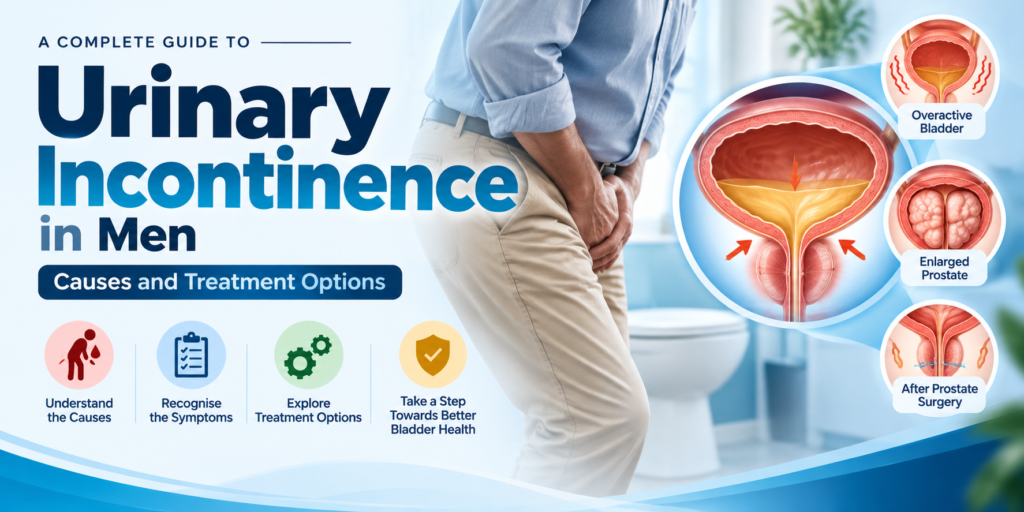
Urinary Incontinence in Men: Causes and Treatment Options
Urinary incontinence—the involuntary leakage of urine—is a condition that can affect men of different ages, although it becomes more common with increasing age and certain prostate, bladder or neurological conditions. Some men experience occasional leakage while coughing or exercising, while others develop a sudden and difficult-to-control urge to urinate.
Although urinary leakage can feel embarrassing, it should not simply be accepted as a normal part of ageing. Identifying the underlying cause is important because several types of male urinary incontinence can be managed with lifestyle changes, medicines, bladder training, pelvic floor exercises or appropriate medical and surgical treatment.
If urinary leakage is frequent, worsening or interfering with everyday life, evaluation by a qualified urologist in Agra can help determine its cause and the most suitable treatment.
What Is Urinary Incontinence?
Urinary incontinence means losing control over urination, resulting in accidental leakage of urine.
Normal urination depends on coordination between the bladder, urinary sphincter, pelvic floor muscles, prostate, nerves and brain. When one or more of these systems are affected, bladder control may become difficult.
Urinary leakage can range from a few drops to a significant loss of urine.
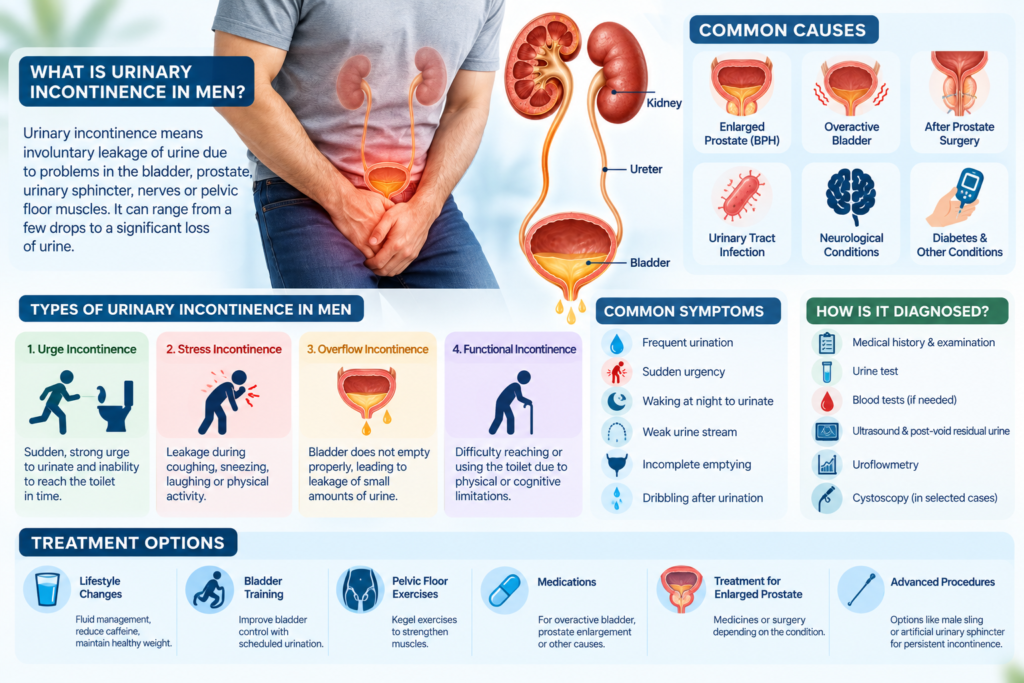
Common Types of Urinary Incontinence in Men
Understanding the type of incontinence is an important part of choosing the right treatment.
1. Urge Incontinence
Urge incontinence occurs when a man suddenly develops a very strong need to urinate and cannot reach the toilet in time.
It may be associated with an overactive bladder and can occur along with:
- Frequent urination
- Sudden urgency
- Waking several times at night to urinate
- Leakage before reaching the toilet
2. Stress Urinary Incontinence
Stress incontinence refers to urine leakage when pressure inside the abdomen increases.
Leakage may occur during:
- Coughing
- Sneezing
- Laughing
- Exercising
- Lifting something heavy
In men, stress urinary incontinence may sometimes occur following certain prostate procedures or surgeries.
3. Overflow Incontinence
Overflow incontinence occurs when the bladder does not empty properly and becomes excessively full.
Urine may then leak in small amounts.
Symptoms may include:
- Weak urine stream
- Difficulty starting urination
- Feeling that the bladder has not emptied completely
- Frequent small amounts of urine
- Dribbling after urination
An enlarged prostate is one possible cause of difficulty emptying the bladder.
4. Functional Incontinence
In some people, the urinary system itself may function relatively normally, but another physical or cognitive limitation makes it difficult to reach or use the toilet in time.
What Causes Urinary Incontinence in Men?
Urinary incontinence is a symptom rather than a single disease. Several conditions can contribute to it.
Enlarged Prostate (BPH)
Benign Prostatic Hyperplasia, commonly called BPH or enlarged prostate, can obstruct urine flow from the bladder.
Over time, bladder function may be affected, resulting in urgency, frequent urination, incomplete emptying or overflow leakage.
Overactive Bladder
An overactive bladder can cause sudden urinary urgency, increased frequency and urge incontinence.
The bladder muscle may contract before a person is ready to urinate, making it difficult to control urine.
Prostate Surgery
Some men may experience urinary leakage after certain prostate surgeries.
The severity and duration vary considerably between individuals. Many patients improve with time and appropriate rehabilitation, while persistent incontinence may require further evaluation and treatment.
Urinary Tract Infection
A urinary tract infection can irritate the bladder and lead to:
- Urgency
- Frequent urination
- Burning while urinating
- Temporary leakage
Treating the underlying infection may improve these symptoms.
Neurological Conditions
The brain, spinal cord and nerves play an important role in controlling the bladder.
Conditions affecting the nervous system can therefore interfere with bladder function and urinary control.
Diabetes and Other Medical Conditions
Certain chronic medical conditions can affect bladder function or the nerves controlling urination.
A detailed medical assessment can help identify whether another health condition is contributing to urinary leakage.
Certain Medicines
Some medications may increase urine production or affect bladder emptying and urinary control.
Patients should not stop prescribed medicines without consulting their doctor.
Symptoms That May Occur Along With Urinary Incontinence
Men with urinary incontinence may also experience:
- Sudden urge to urinate
- Frequent urination
- Waking repeatedly at night to urinate
- Weak urinary stream
- Difficulty starting urine
- Dribbling after urination
- Feeling of incomplete bladder emptying
- Leakage during coughing or physical activity
- Inability to reach the toilet in time
The pattern of symptoms provides useful information about the possible cause.
How Is Male Urinary Incontinence Diagnosed?
Treatment should focus on the underlying cause rather than only controlling the leakage.
A urologist may begin with a detailed medical history and examination.
Medical History
You may be asked about:
- When leakage occurs
- How frequently it happens
- Amount of urine leakage
- Urinary frequency and urgency
- Night-time urination
- Previous prostate treatment or surgery
- Current medicines
- Other medical conditions
Bladder Diary
Some patients may be advised to maintain a bladder diary recording fluid intake, frequency of urination, urgency and episodes of leakage.
This can help identify patterns.
Urine Test
A urine examination can help identify infection, blood or other abnormalities.
Post-Void Residual Urine
An ultrasound or other appropriate method may be used to determine how much urine remains in the bladder after urination.
A large residual volume may indicate difficulty emptying the bladder.
Uroflowmetry
Uroflowmetry measures the rate and pattern of urine flow and may help assess urinary obstruction or bladder function.
Additional Investigations
Depending on the symptoms and suspected cause, the urologist may recommend additional investigations such as ultrasound, urodynamic testing, cystoscopy or other appropriate tests.
Not every patient requires every investigation.
Treatment Options for Urinary Incontinence in Men
Treatment varies according to the type, severity and underlying cause of urinary leakage.
1. Lifestyle Changes
Simple changes may improve symptoms in selected patients.
These can include:
- Managing fluid intake appropriately
- Reducing excessive caffeine
- Avoiding excessive alcohol
- Maintaining a healthy body weight
- Preventing constipation
- Planning regular toilet visits
Patients should not excessively restrict water without medical advice.
2. Bladder Training
Bladder training aims to gradually improve bladder control.
A structured urination schedule may help some patients increase the interval between toilet visits and improve urgency control.
3. Pelvic Floor Exercises
Pelvic floor muscle exercises, often called Kegel exercises, can strengthen the muscles involved in urinary control.
They can be particularly useful for selected men with stress urinary incontinence, including some patients recovering after prostate surgery.
Correct technique is important for obtaining maximum benefit.
4. Medicines
Different medications may be prescribed depending on the underlying problem.
For example, medicines may be used to manage:
- Overactive bladder
- Urinary urgency
- Prostate enlargement
- Difficulty with urinary flow
Medication should be selected by a doctor after evaluating the cause of symptoms.
5. Treatment for Enlarged Prostate
If urinary leakage is associated with significant prostate enlargement or bladder outlet obstruction, treatment of the prostate may improve urinary symptoms.
Depending on the patient’s condition, treatment can include medicines or an appropriate surgical procedure.
6. Treatment for Persistent Stress Incontinence
Persistent stress urinary incontinence following prostate treatment may require specialist management.
In selected patients, surgical options such as a male sling or artificial urinary sphincter may be considered.
The appropriate procedure depends on factors including the severity of leakage, previous treatment and individual clinical findings.
Can Male Urinary Incontinence Be Treated?
In many cases, urinary leakage can be significantly improved or effectively managed once its cause is identified.
The important point is that treatment is not the same for every patient.
A man with urinary leakage caused by an enlarged prostate requires a different approach from someone experiencing stress incontinence after prostate surgery or urge incontinence due to an overactive bladder.
Accurate diagnosis therefore plays an important role in successful treatment.
When Should You See a Urologist?
Consider consulting a urologist if:
- Urine leakage happens frequently
- Leakage is becoming worse
- You cannot control a sudden urge to urinate
- You have difficulty emptying your bladder
- Your urinary stream has become weak
- You repeatedly wake at night to urinate
- Leakage started after prostate surgery
- Urinary symptoms are affecting work, sleep or daily activities
Seek Prompt Medical Attention If You Have:
- Inability to pass urine
- Blood in the urine
- Fever or chills with urinary symptoms
- Severe lower abdominal or urinary pain
- Sudden significant changes in bladder control accompanied by neurological symptoms
These symptoms may require urgent medical assessment.
Don’t Ignore Persistent Urine Leakage
Urinary incontinence can affect confidence, sleep, travel, work and everyday activities. However, embarrassment should not prevent men from discussing urinary symptoms with their doctor.
The first step is identifying why the leakage is happening.
Depending on the cause, modern management can include lifestyle modifications, bladder training, pelvic floor exercises, medication, treatment for prostate enlargement or specialized procedures for persistent incontinence.
If you are experiencing urinary leakage, frequent urination, urgency or difficulty controlling your bladder, consult an experienced urologist in Agra for proper evaluation and individualized treatment.
Frequently Asked Questions
Is urinary incontinence normal in older men?
The risk can increase with age, but persistent urinary leakage should not automatically be considered a normal consequence of ageing. An underlying bladder, prostate, neurological or other condition may be responsible.
Can an enlarged prostate cause urinary leakage?
Yes. Significant prostate enlargement can interfere with bladder emptying and may contribute to urinary symptoms, including overflow leakage in some patients.
Can Kegel exercises help men with urinary incontinence?
Pelvic floor exercises can help selected patients, particularly some men with stress urinary incontinence. Correct technique and consistency are important.
Why do I leak urine before reaching the toilet?
Sudden urgency followed by leakage may be associated with urge incontinence or an overactive bladder. A urological evaluation can help identify the cause.
Is urinary incontinence after prostate surgery permanent?
Not necessarily. Urinary control may improve over time in many patients. Persistent leakage should be evaluated because rehabilitation and additional treatment options are available.
Which doctor should I consult for male urinary incontinence?
A urologist specializes in conditions affecting the urinary tract and male urinary system and can evaluate the underlying cause of urinary incontinence.
Consult Dr. Dilip Kumar Mishra
Dr. Dilip Kumar Mishra
MBBS, MS, MRCS (Edinburgh, UK)
MCh (Urology), FRLS (Japan), FICS (USA)
Urocare & Child Clinic
Bhawna Estate, H. No. 24, Babarpur Road, next to Nukkad Cafe, near Holy Public School, Sikandra, Agra, Uttar Pradesh – 282007
Yatharth Hospital
610, Kakretha Road, NH-19, Near Guru Ka Taal, Agra
For Appointments:
📞 9758278670
📞 9758278671
