
Hydronephrosis: Causes, Symptoms, Diagnosis and Treatment of Kidney Swelling
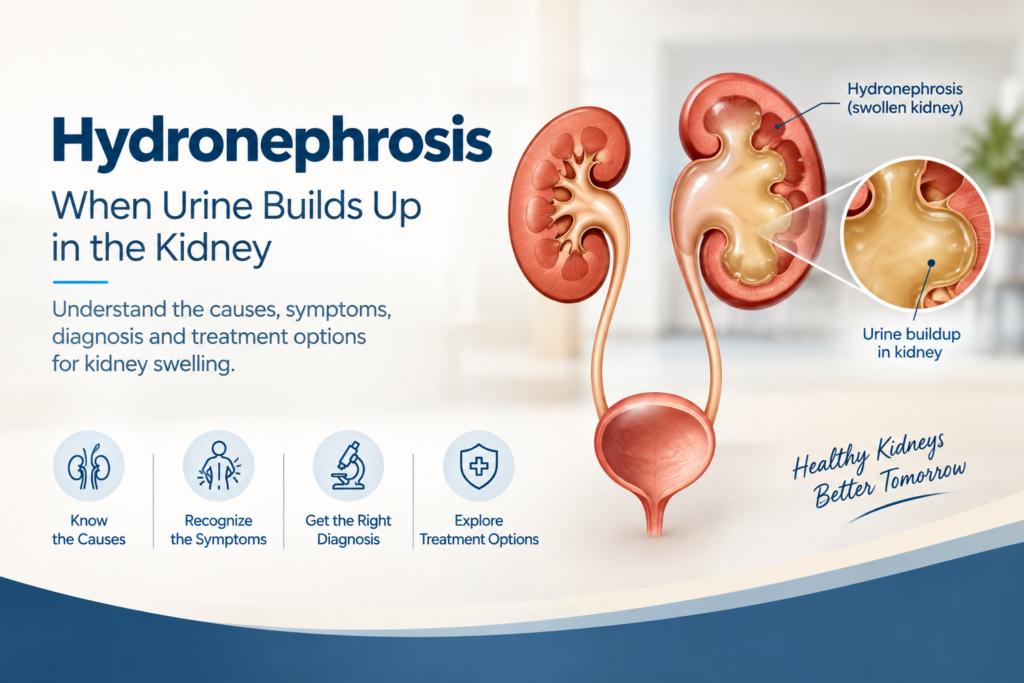
The kidneys play an essential role in filtering waste products from the blood and maintaining the body’s fluid balance. When urine cannot drain properly from a kidney into the bladder, it may accumulate and cause the kidney to swell. This condition is known as hydronephrosis.
Hydronephrosis can affect one or both kidneys and may occur at any age. Sometimes it causes noticeable symptoms, such as pain in the side or back, while in other cases it is discovered during an ultrasound performed for another reason.
Early evaluation is important because persistent urinary obstruction can damage kidney function if left untreated.
If you are searching for the Best Urologist in Agra for an evaluation of kidney swelling or suspected urinary blockage, understanding the causes, symptoms and available treatments can help you make informed decisions about your health.
What Is Hydronephrosis?
Hydronephrosis refers to the swelling or dilation of the kidney’s urine-collecting system due to a buildup of urine. Normally, urine flows from the kidneys through narrow tubes called ureters into the urinary bladder before leaving the body.
When this flow is obstructed or drainage is impaired, urine may accumulate in the kidney.
Hydronephrosis is not a disease by itself. It is a finding that indicates an underlying problem that needs to be identified.
The condition may be:
- Unilateral hydronephrosis: One kidney is affected.
- Bilateral hydronephrosis: Both kidneys are affected.
The severity can range from mild dilation to significant swelling associated with impaired kidney function. The appropriate treatment depends on the cause, degree of obstruction, symptoms and kidney function.
What Causes Hydronephrosis?
Several conditions can interfere with the normal flow of urine.
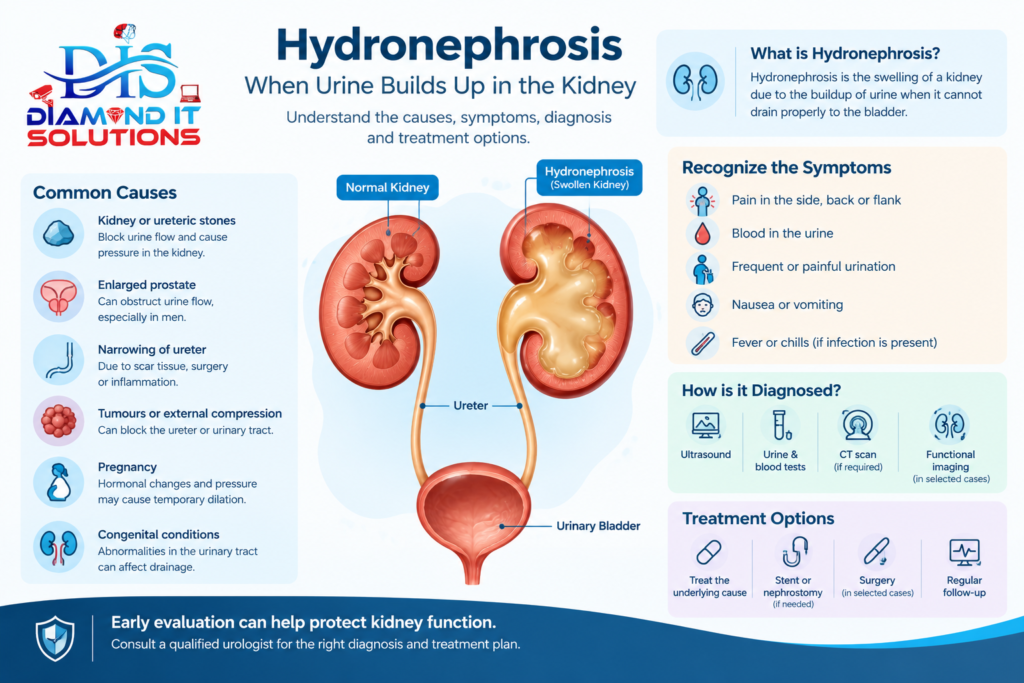
1. Kidney or Ureteric Stones
Stones can develop in the kidneys or move into the ureter. If a stone blocks urine flow, pressure can build up behind the obstruction and cause hydronephrosis.
Symptoms may include severe pain in the side or back, pain radiating towards the groin, nausea or blood in the urine.
2. Enlarged Prostate
In men, an enlarged prostate can obstruct the flow of urine from the bladder. In some cases, significant obstruction may affect the upper urinary tract and lead to hydronephrosis, particularly when both kidneys are involved.
Symptoms may include a weak urine stream, difficulty starting urination, frequent urination or a feeling that the bladder has not emptied completely.
3. Narrowing of the Ureter
A ureter may become narrowed because of scar tissue, previous surgery, injury, inflammation or a condition present from birth. This narrowing can interfere with normal urine drainage.
4. Urinary Tract Obstruction
Blockages may occur at different points in the urinary tract. Depending on the location, causes can include bladder outlet obstruction, ureteric narrowing or other structural abnormalities.
5. Pregnancy
Hormonal changes and pressure from the growing uterus can cause dilation of the urinary tract during pregnancy. This may be physiological, but symptoms or concerning findings still require appropriate medical assessment.
6. Tumours or External Compression
In some cases, a tumour or another mass can compress the ureter or obstruct urine flow. The underlying cause must be evaluated by a medical professional.
7. Congenital Conditions
Some people are born with abnormalities affecting the connection between the kidney and ureter or the structure of the urinary tract. These conditions can interfere with drainage and may require specialist assessment.
Symptoms of Hydronephrosis
The symptoms depend on how quickly the condition develops, its severity and whether one or both kidneys are affected.
Common symptoms may include:
- Pain in the side, back or flank
- Pain that spreads towards the lower abdomen or groin
- Nausea or vomiting
- Frequent or painful urination
- Blood in the urine
- Difficulty passing urine
- Fever or chills when an infection is present
Some patients have no obvious symptoms, particularly when hydronephrosis develops gradually.
Important: Fever or chills with suspected urinary obstruction, severe flank pain, persistent vomiting, or an inability to pass urine requires urgent medical assessment. An infected obstructed urinary tract can be a medical emergency.
How Is Hydronephrosis Diagnosed?
The aim of diagnosis is to confirm the swelling, identify its cause and assess whether kidney function is affected.
1. Ultrasound of the Kidneys and Urinary Tract
Ultrasound is commonly used to identify dilation of the kidney’s urine-collecting system. It can help assess the severity of swelling and may also reveal certain stones or bladder abnormalities.
2. Urine Tests
Urinalysis can help detect blood, signs of infection and other abnormalities. A urine culture may be recommended when an infection is suspected.
3. Blood Tests
Blood tests, including serum creatinine and estimated glomerular filtration rate (eGFR), may be used to assess kidney function.
4. CT Scan
A CT scan may be recommended when a stone, obstruction or another underlying cause needs more detailed evaluation. The choice of scan depends on the clinical situation and patient-specific factors.
5. Additional Functional Imaging
In selected cases, a nuclear medicine renal scan may help determine how well each kidney functions and whether urine drainage is significantly impaired.
The treating urologist decides which investigations are appropriate based on symptoms, examination and initial findings.
Treatment Options for Hydronephrosis
Treatment focuses on the underlying cause, relieving significant obstruction when necessary and protecting kidney function. Not every case requires surgery.
1. Monitoring Mild Hydronephrosis
Mild cases without significant obstruction or deterioration in kidney function may be monitored with follow-up examinations, imaging and kidney function tests.
Monitoring is appropriate only when the treating clinician determines that it is safe.
2. Treating Kidney or Ureteric Stones
When a stone causes obstruction, treatment depends on its size, location, symptoms, infection status and the patient’s overall condition.
Options may include observation in selected cases, medication for symptom control, ureteroscopy, laser stone treatment or other procedures when indicated.
3. Relieving Urinary Obstruction
If urine cannot drain adequately, a urologist may recommend a ureteric stent or a percutaneous nephrostomy tube to restore drainage.
The choice depends on the location and cause of obstruction, the urgency of treatment and the patient’s condition.
4. Treating Prostate-Related Obstruction
When an enlarged prostate causes significant urinary obstruction, treatment may include medication or a suitable procedure, depending on the severity of symptoms and the effects on the urinary tract.
5. Corrective Surgery
Certain structural abnormalities, such as a narrowing at the junction between the kidney and ureter, may require reconstructive surgery. The decision depends on the cause, symptoms, drainage and kidney function.
Treatment should never be delayed when urgent drainage is required, particularly if obstruction is accompanied by infection or threatens kidney function.
Can Hydronephrosis Damage the Kidneys?
Yes. Persistent or severe obstruction can reduce kidney function and may cause permanent damage if it is not addressed in time.
However, the risk varies according to the cause, severity, duration and whether one or both kidneys are affected.
Prompt assessment and appropriate treatment can help protect kidney function. Follow-up imaging and laboratory tests may be necessary to confirm that drainage has improved and the kidneys are recovering as expected.
When Should You Consult a Urologist?
Seek medical evaluation if you experience persistent flank pain, blood in the urine, recurrent urinary infections, difficulty passing urine or an ultrasound report showing hydronephrosis.
Seek emergency care if you have fever with suspected obstruction, severe or uncontrolled pain, repeated vomiting, very little urine or an inability to urinate.
If you are looking for the Best Urologist in Agra, choose a specialist who can assess the underlying cause, interpret relevant investigations and recommend an appropriate treatment plan.
Frequently Asked Questions About Hydronephrosis
1. Is hydronephrosis a serious condition?
It can be mild or serious, depending on its cause and severity. Significant or prolonged obstruction can damage kidney function, so the underlying cause should be assessed.
2. Can hydronephrosis go away on its own?
Some mild cases may resolve when temporary dilation or obstruction improves. However, persistent obstruction may require treatment. Follow-up should be guided by a healthcare professional.
3. Does hydronephrosis always require surgery?
No. Treatment may involve monitoring, managing the underlying cause or relieving obstruction with a minimally invasive procedure. Surgery is needed only in selected cases.
4. Can hydronephrosis occur without pain?
Yes. Some patients have no noticeable symptoms, and the condition may be discovered during imaging performed for another reason.
5. Which test is commonly used to detect hydronephrosis?
Ultrasound is commonly used to identify kidney swelling. Additional urine tests, blood tests, CT imaging or functional scans may be recommended depending on the suspected cause.
6. Can kidney stones cause hydronephrosis?
Yes. A stone that blocks urine flow through the ureter can cause urine to accumulate in the kidney and lead to hydronephrosis.
7. Which doctor treats hydronephrosis?
A urologist commonly evaluates hydronephrosis caused by urinary obstruction, stones or structural abnormalities. Other specialists may be involved when the underlying condition requires their expertise.
Conclusion
Hydronephrosis occurs when urine builds up in the kidney because normal drainage is impaired. Kidney stones, prostate-related obstruction, ureteric narrowing and other conditions can cause this problem.
Although some cases are mild, persistent obstruction can threaten kidney function. Timely diagnosis, appropriate treatment and follow-up are important for protecting the kidneys.
If you have been diagnosed with hydronephrosis or have symptoms suggesting urinary obstruction, consult a qualified urologist for an individual assessment.
Consult Dr. Dilip Kumar Mishra – Urologist in Agra
Dr. Dilip Kumar Mishra is an experienced urologist with qualifications including MBBS, MS, MRCS (Edinburgh, UK), MCh (Urology), FRLS (Japan) and FICS (USA). He provides evaluation and treatment for various urological conditions, including kidney disorders, urinary obstruction and urinary tract problems.
1. Urocare & Child Clinic
Address: Bhawna Estate, H. No. 24, Babarpur Road, next to Nukkad Cafe, near Holy Public School, Sikandra, Agra, Uttar Pradesh – 282007.
2. Yatharth Hospital
Address: 610, Kakretha Road, NH-19, near Guru Ka Taal, Agra, Uttar Pradesh.
Appointment Contact Details
Phone: 9758278670 / 9758278671
Website: https://drdilipmishraurologist.com/
Patients can contact the clinic to enquire about consultation timings and appointments for hydronephrosis, kidney disorders, urinary obstruction and other urological conditions.
If you are looking for the Best Urologist in Agra, consult Dr. Dilip Kumar Mishra for a professional evaluation and an appropriate treatment plan.
Call today to enquire about an appointment at either location.
