Introduction:
Uro-oncology care is a specialized field dedicated to the diagnosis, treatment, and management of cancers affecting the urinary system and male reproductive organs. This branch of oncology encompasses a range of conditions, including bladder cancer, prostate cancer, kidney cancer, and testicular cancer. This article delves into the complexities of uro-oncology, exploring the diagnostic approaches, treatment modalities, and ongoing advancements in the field.
## Common Urological Cancers:
1. **Bladder Cancer:**
– Often characterized by blood in the urine, bladder cancer may involve the inner lining (transitional epithelium) or the muscular wall of the bladder.
– Treatment options include surgery, chemotherapy, immunotherapy, and radiation therapy.
2. **Prostate Cancer:**
– Affecting the prostate gland, prostate cancer is the most common cancer in men. Diagnosis often involves a prostate-specific antigen (PSA) test and a biopsy.
– Treatment may include active surveillance, surgery, radiation therapy, hormone therapy, or a combination of these.
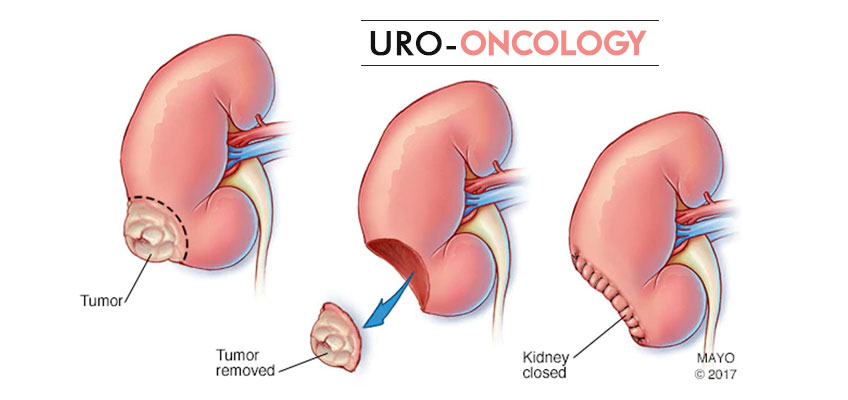
3. **Kidney Cancer:**
– Renal cell carcinoma is the most prevalent form of kidney cancer. Symptoms may include blood in the urine, abdominal pain, or a palpable mass.
– Treatment options range from surgery and targeted therapies to immunotherapy and radiation.
4. **Testicular Cancer:**
– Testicular cancer typically affects young men and often presents as a painless lump or swelling in the testicle.
– Treatment involves surgery to remove the affected testicle, followed by chemotherapy or radiation therapy as needed.
## Diagnostic Approaches in Uro-Oncology:
1. **Imaging Studies:**
– CT scans, MRIs, and ultrasound examinations are utilized to visualize tumors and assess their size and location.
2. **Biopsy:**
– Tissue samples obtained through biopsy provide a definitive diagnosis and help determine the cancer type and its characteristics.
3. **Tumor Markers:**
– Blood tests measuring specific markers, such as PSA for prostate cancer or CA-125 for bladder cancer, aid in diagnosis and monitoring treatment response.
## Uro-Oncology Treatment Modalities:
1. **Surgery:**
– Surgical intervention is often a primary treatment for urological cancers, involving the removal of tumors, affected organs, or nearby lymph nodes.
2. **Radiation Therapy:**
– High-energy beams target and destroy cancer cells. External beam radiation or brachytherapy (internal radiation) may be employed.
3. **Chemotherapy:**
– Medications target and kill rapidly dividing cancer cells, either systemically or directly into the affected area.
4. **Immunotherapy:**
– Enhancing the body’s immune system to identify and attack cancer cells. Immune checkpoint inhibitors are a promising class of drugs in uro-oncology.
5. **Targeted Therapy:**
– Drugs that specifically target cancer cells based on their molecular characteristics, minimizing damage to healthy cells.
## Ongoing Advancements:
1. **Precision Medicine:**
– Tailoring treatment plans based on the specific genetic and molecular characteristics of an individual’s cancer for more targeted and effective therapies.
2. **Immunotherapy Innovations:**
– Continued research into immune checkpoint inhibitors and adoptive cell therapies for enhanced immune system responses.
3. **Minimally Invasive Surgery:**
– Advancements in robotic-assisted surgery and laparoscopic techniques for urological cancer procedures, reducing recovery times.
## Supportive Care in Uro-Oncology:
1. **Multidisciplinary Teams:**
– Collaboration between urologists, medical oncologists, radiation oncologists, and other specialists ensures comprehensive and personalized care.
2. **Palliative Care:**
– Providing supportive care to manage symptoms, enhance quality of life, and address the emotional and psychological needs of patients and their families.
Conclusion:
Uro-oncology care is at the forefront of cancer treatment, offering a range of sophisticated approaches to combat urological cancers. Advances in diagnostics, treatment modalities, and ongoing research are shaping a future where personalized and targeted therapies promise better outcomes for individuals facing these challenging conditions. The multidisciplinary nature of uro-oncology care underscores the importance of a collaborative approach to provide holistic and effective treatment for patients battling urological cancers.

Minima consequat excepturi sociis? Tempore lacus asperiores facilisis rem eu nam hic animi eaque tellus, tempus! Pellentesque excepteur.
23 Sylvan Ave, Mountain
View, CA 94041USA
Copyright © 2025 Medical Care. Powered by Bosathemes.