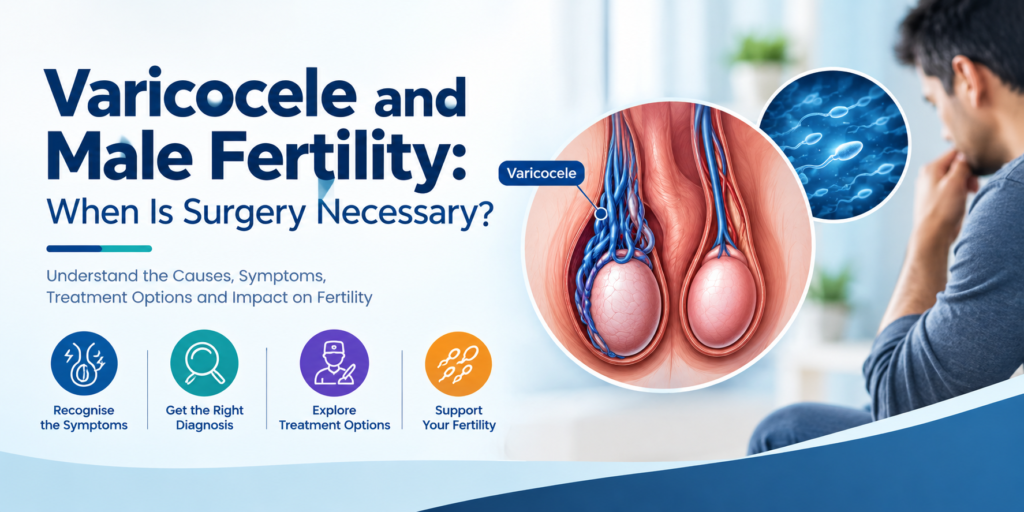
Varicocele and Male Fertility: When Is Surgery Necessary?
Varicocele is a common condition in men that can sometimes affect sperm quality and fertility. Although many men with varicocele do not experience symptoms or fertility problems, the condition may require medical evaluation when there is persistent discomfort, abnormal semen analysis, or difficulty conceiving.
Understanding when varicocele treatment is necessary can help men make informed decisions about their reproductive health. In selected cases, varicocele surgery may improve sperm parameters and the chances of pregnancy, but surgery is not required for every patient.
If you are concerned about male fertility or have been diagnosed with varicocele, consulting an experienced urologist can help determine the most appropriate next step.
What Is a Varicocele?
A varicocele is an enlargement of the veins inside the scrotum, the skin-covered sac that holds the testicles. These veins help carry blood away from the testicles. When the valves inside the veins do not function properly, blood may collect in them, causing the veins to enlarge.
Varicoceles commonly develop on the left side, although they can occur on either side or both sides.
The condition is relatively common and does not always cause health problems. However, in some men, a varicocele may be associated with reduced sperm production, changes in sperm movement, testicular size differences, or discomfort.
Can a Varicocele Affect Male Fertility?
Yes, a varicocele can affect male fertility in some men, but not everyone with this condition will experience infertility.
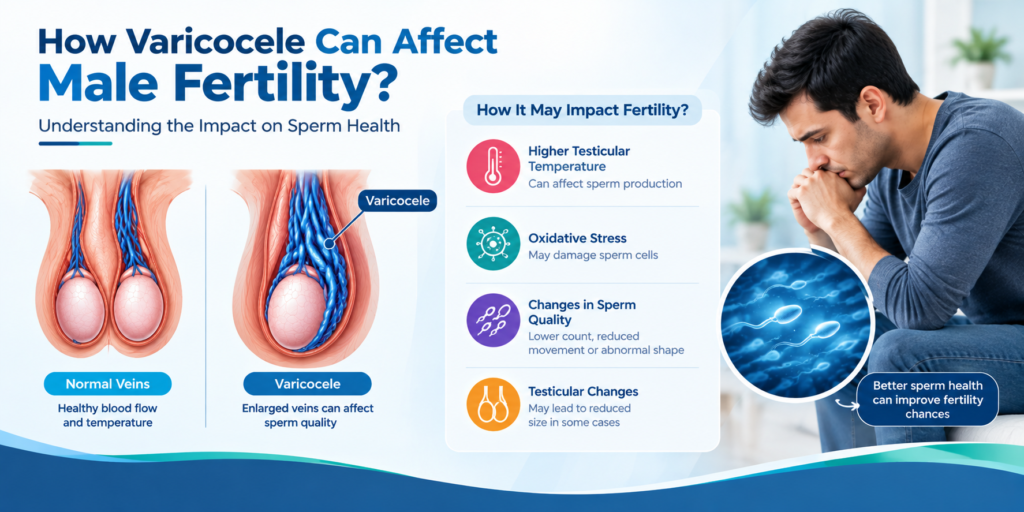
Researchers believe several mechanisms may contribute to fertility problems associated with varicocele:
- Increased testicular temperature: Impaired blood flow may affect the temperature regulation necessary for normal sperm production.
- Oxidative stress: Increased oxidative stress may damage sperm cells and affect their function.
- Changes in sperm production: Some men may develop a lower sperm count or abnormalities in sperm movement and shape.
- Testicular changes: In certain cases, the affected testicle may become smaller or show signs of impaired development.
A varicocele does not automatically mean that a man cannot father a child. Fertility depends on several factors, including sperm quality, reproductive health, the female partner’s fertility, and other medical conditions.
What Are the Common Symptoms of Varicocele?
Many varicoceles cause no noticeable symptoms and are discovered during a routine examination or fertility evaluation.
When symptoms occur, they may include:
- A dull ache or dragging sensation in the scrotum
- Discomfort that becomes more noticeable after prolonged standing or physical activity
- Relief when lying down
- Enlarged or prominent veins that may feel like a bundle of cords
- A difference in testicular size
- Difficulty conceiving, particularly when semen parameters are abnormal
Persistent scrotal discomfort, a noticeable change in testicular size, or difficulty conceiving should be evaluated by a qualified medical professional. Sudden or severe testicular pain requires urgent medical assessment because it may indicate a different condition that needs prompt treatment.
How Is Varicocele Diagnosed?
A urologist generally begins with a medical history and physical examination. The assessment may include examining the scrotum while standing and lying down.
Depending on the findings, further investigations may be recommended.
1. Physical Examination
The doctor checks for enlarged veins, tenderness, and differences in testicular size. Some varicoceles can be felt during examination, while smaller ones may not be easily detectable.
2. Scrotal Doppler Ultrasound
An ultrasound with Doppler may be used when the physical examination is inconclusive or when another scrotal condition needs to be ruled out. It can help assess the veins and blood flow.
An ultrasound finding alone does not necessarily mean that surgery is required.
3. Semen Analysis
For men concerned about fertility, semen analysis helps assess sperm concentration, movement, and morphology. Depending on the findings, the doctor may recommend a repeat test because semen parameters can vary.
4. Additional Fertility Evaluation
If a couple is experiencing difficulty conceiving, both partners may need an appropriate fertility assessment. Hormonal tests or other investigations may be recommended based on the individual’s symptoms and medical history.
When Is Varicocele Surgery Necessary?
Varicocele surgery is not necessary for every patient. The decision depends on symptoms, examination findings, fertility goals, testicular development, and semen analysis results.
1. When Infertility and Abnormal Semen Parameters Are Present
Varicocele repair may be considered when a man is trying to conceive, has a clinically palpable varicocele, has infertility, and has abnormal semen parameters.
These factors are important because treating every varicocele does not improve fertility. A urologist will assess whether the varicocele is a plausible contributor to the couple’s fertility difficulties.
2. When Persistent Pain Does Not Improve
Some men experience ongoing scrotal discomfort associated with varicocele. If conservative measures do not provide sufficient relief, a specialist may discuss procedural treatment after considering other possible causes of pain.
Surgery does not guarantee that all scrotal pain will disappear, so a careful assessment is important before proceeding.
3. When Testicular Growth or Size Is Affected
In adolescents, a varicocele associated with persistent differences in testicular growth may require specialist evaluation and monitoring. Surgery may be considered in selected cases when the size difference is confirmed and clinically significant.
4. In Selected Fertility Treatment Situations
Some men with varicocele and unexplained infertility may be considered for repair after a comprehensive assessment. The potential benefits and uncertainties should be discussed, especially when assisted reproductive techniques are being considered.
Important: Surgery is generally not recommended for a varicocele that cannot be felt on physical examination and is detected only through imaging, solely for the purpose of improving fertility. Men with no sperm in the ejaculate also require individualized specialist counselling because evidence supporting varicocele repair in this situation remains uncertain.
What Is Varicocele Surgery?
The surgical treatment of varicocele is called varicocelectomy. Its purpose is to close or tie off the affected veins so that blood can drain through healthier veins.
The most suitable technique depends on the patient’s condition, the surgeon’s expertise, and available facilities.
Common approaches include:
- Microsurgical varicocelectomy: Uses magnification to identify and treat affected veins while helping preserve important surrounding structures.
- Laparoscopic varicocele repair: Uses small incisions and a camera to access and treat the affected veins.
- Conventional open surgical repair: Treats the enlarged veins through a surgical incision.
A radiological procedure called varicocele embolization may also be an option for selected patients. It blocks the affected vein through a catheter-based technique rather than conventional surgery.
Your urologist can explain the advantages, limitations, risks, and suitability of each approach.
Can Varicocele Surgery Improve Fertility?
In appropriately selected patients, varicocele repair may improve sperm concentration and some other semen parameters. It may also improve the chance of pregnancy for certain couples.
However, the results vary between individuals. Improvement is not guaranteed, and pregnancy depends on multiple male and female fertility factors.
Sperm production takes time, so semen parameters are generally reassessed after treatment according to the treating specialist’s advice. The doctor may also discuss whether further fertility treatment is appropriate.
Patients should understand that varicocele surgery is intended to address a potentially contributing condition, not to guarantee conception.
What Are the Possible Risks of Varicocele Surgery?
Like any procedure, varicocele repair has potential risks. These may include:
- Recurrence or persistence of the varicocele
- Fluid collection around the testicle, known as a hydrocele
- Bruising, swelling, or discomfort after surgery
- Infection or bleeding
- Injury to surrounding structures, including the testicular artery, in uncommon cases
The likelihood of complications depends on the procedure and individual circumstances. Discuss the expected recovery, follow-up schedule, and warning signs with your treating doctor before surgery.
What Is Recovery Like After Varicocele Surgery?
Recovery depends on the procedure performed and the individual’s general health. Many patients can return to light daily activities relatively soon, while strenuous exercise, heavy lifting, and sexual activity may need to be restricted for a period recommended by the surgeon.
Follow all discharge instructions and attend scheduled follow-up appointments. Contact your treating team if you experience increasing pain, fever, worsening swelling, or other concerning symptoms.
If fertility improvement is the treatment goal, follow-up semen analysis may be recommended to assess the response.
Can Varicocele Be Managed Without Surgery?
Yes. Observation may be appropriate for men who have no significant symptoms, no concerning testicular changes, and no fertility-related indication for treatment.
Depending on the case, the doctor may recommend monitoring, supportive underwear, or other measures to manage discomfort. Pain relief medicines should only be used when appropriate for the patient’s health and medical history.
Men with fertility concerns should not assume that observation is always sufficient. A specialist can help determine whether monitoring, surgery, embolization, or a different fertility treatment plan is most appropriate.
When Should You Consult a Urologist?
Consider arranging a urological assessment if you notice enlarged scrotal veins, persistent scrotal discomfort, a change in testicular size, or difficulty conceiving.
A timely consultation can help establish the diagnosis, assess sperm health when relevant, and identify whether treatment is necessary.
If you are searching online for the Best Urologist in Agra, look for an appropriately qualified specialist who can explain your diagnosis, review your investigations, discuss treatment alternatives, and provide an individualized care plan.
Consult Dr. Dilip Kumar Mishra for Varicocele Evaluation in Agra
Dr. Dilip Kumar Mishra is a urologist and andrology specialist with qualifications including MBBS, MS, MRCS (Edinburgh, UK), MCh (Urology), FRLS (Japan), and FICS (USA). He evaluates and manages a range of urological conditions, including male infertility and varicocele.
If you have been diagnosed with varicocele or are concerned about fertility, a consultation can help you understand your condition and the available treatment options.
Clinic 1: Yatharth Hospital
Address: 610, Kakretha Road, NH-19, near Guru Ka Taal, Agra, Uttar Pradesh – 282007.
Published consultation listing: Monday–Saturday, 10:00 AM–3:00 PM.
Clinic 2: Urocare & Child Clinic
Address: H. No. 24, Bhawna Estate, Babarpur Road, next to Nukkad Cafe, near Holy Public School, Sikandra, Agra, Uttar Pradesh – 282007.
Published listing hours: Monday–Saturday, 3:00 PM–7:00 PM.
Phone: 9758278670 / 9758278671
Website: https://drdilipmishraurologist.com/
Google Business Profile: https://share.google/9eaOD0W2LxcxZQ00q
Frequently Asked Questions
1. Does every varicocele require surgery?
No. Many varicoceles do not need treatment. Surgery is considered based on symptoms, examination findings, testicular changes, and fertility-related factors.
2. Can varicocele cause infertility?
Varicocele can affect sperm production or quality in some men, but many men with the condition remain fertile. A semen analysis and specialist assessment can help evaluate individual fertility concerns.
3. When should varicocele surgery be considered for infertility?
It may be considered in men attempting to conceive who have a palpable varicocele, infertility, and abnormal semen parameters. The decision should be made after evaluating the couple’s overall fertility situation.
4. Does varicocele surgery guarantee pregnancy?
No. Surgery may improve semen parameters and pregnancy chances in selected patients, but it cannot guarantee pregnancy. Outcomes depend on several factors affecting both partners.
5. Is varicocele surgery the only treatment option?
No. Depending on the case, observation or radiological embolization may be appropriate alternatives. A urologist can explain the options and their suitability.
6. How can I book an appointment with Dr. Dilip Kumar Mishra in Agra?
Call 9758278670 or 9758278671 to ask about appointment availability, consultation location, and timings. You can also visit the doctor’s website or Google Business Profile for further information.
Conclusion
Varicocele is common, but its impact on male fertility varies from one person to another. While some men need only observation, others may benefit from treatment when the varicocele is associated with infertility, abnormal semen parameters, persistent pain, or testicular changes.
The most important step is to obtain an accurate diagnosis and understand whether treatment is likely to provide meaningful benefits in your particular situation.
For varicocele evaluation and male fertility concerns in Agra, consult Dr. Dilip Kumar Mishra to discuss your symptoms, investigation results, and appropriate treatment options.
Medical disclaimer: This article is intended for general educational purposes and does not replace a medical consultation, diagnosis, or individualized treatment advice.
