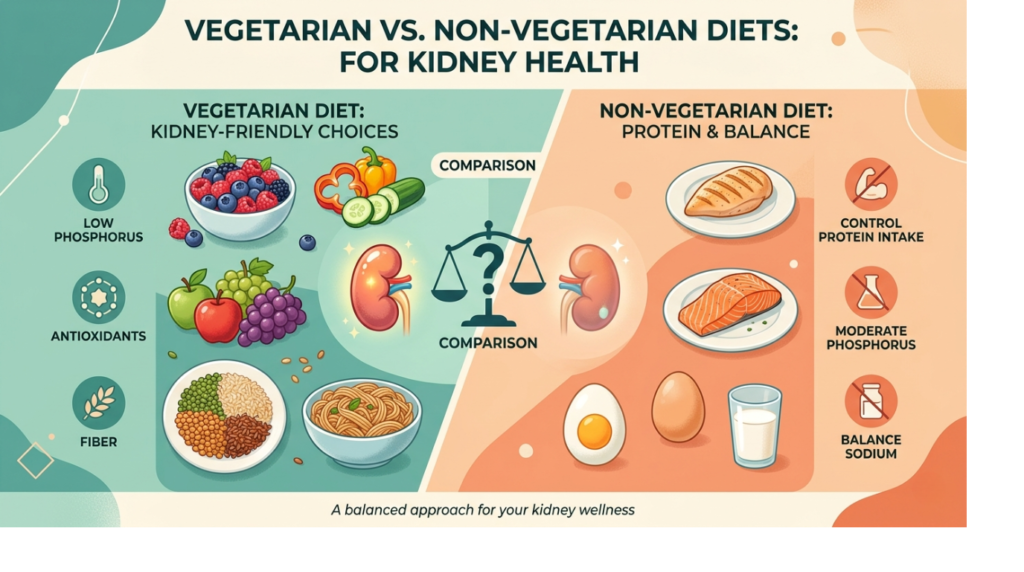
Vegetarian Diet vs Non-Veg Diet for Kidney Health
By Dr. Dilip Kumar Mishra – Best Urologist in Agra
Kidney health is deeply influenced by what we eat every day. With rising cases of kidney stones, chronic kidney disease (CKD), and urinary disorders, diet has become a critical factor in prevention and management. One of the most common questions patients ask is: Is a vegetarian diet better than a non-vegetarian diet for kidney health?
As the best urologist in Agra, Dr. Dilip Kumar Mishra emphasizes that both vegetarian and non-vegetarian diets can impact kidney function—but the difference lies in quality, balance, and moderation.
This blog explores the scientific comparison between vegetarian and non-veg diets and their effects on kidney health.
Understanding Kidney Function and Diet
The kidneys play a vital role in filtering waste, balancing fluids, and maintaining electrolyte levels. One of their key tasks is processing protein metabolism waste, which means diet—especially protein intake—directly affects kidney workload.
Excessive or improper dietary habits can lead to:
- Kidney stones
- High uric acid levels
- Chronic kidney disease
- Reduced kidney function
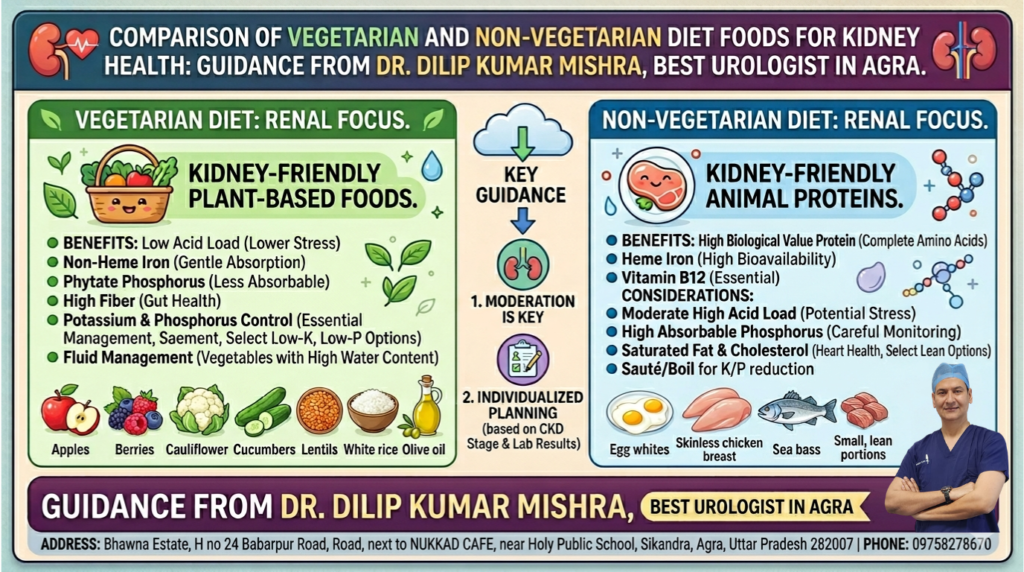
What is a Vegetarian Diet?
A vegetarian diet excludes meat, fish, and poultry but may include dairy and eggs. A well-planned vegetarian diet focuses on:
- Fruits and vegetables
- Whole grains
- Legumes (dal, beans, lentils)
- Nuts and seeds
According to the National Kidney Foundation, plant-based diets can be healthy for kidneys if properly balanced with essential nutrients. (National Kidney Foundation)
What is a Non-Vegetarian Diet?
A non-vegetarian diet includes animal-based foods such as:
- Chicken
- Fish
- Red meat
- Eggs
These foods are rich in protein but also contain higher levels of purines, saturated fats, and acid load, which can affect kidney function.
Vegetarian Diet and Kidney Health
1. Better Kidney Function
Studies show that vegetarians often have better kidney function (higher eGFR levels) compared to non-vegetarians. (PMC)
This is because plant-based diets:
- Reduce blood pressure
- Improve blood sugar levels
- Lower cholesterol
All these factors help protect kidneys from long-term damage.
2. Lower Risk of Kidney Stones
Vegetarian diets are associated with a lower risk of kidney stone formation. (kidneystoners.org)
Reasons include:
- Higher intake of fiber
- Increased urinary citrate (prevents stones)
- Lower acid load
Research suggests vegetarians may have up to 40–60% lower risk of stones compared to heavy meat eaters. (jrenhep.com)
3. Reduced Acid Load on Kidneys
Plant-based foods create a more alkaline environment, which is beneficial for kidney health.
In contrast, animal protein produces acid, increasing kidney workload and affecting urine composition. (MDPI)
4. Lower Risk of Chronic Kidney Disease
Higher intake of plant protein is linked with reduced risk of CKD due to:
- Anti-inflammatory effects
- Better metabolic health
- Lower obesity risk (MDPI)
Limitations of a Vegetarian Diet
While beneficial, a vegetarian diet is not perfect if poorly planned:
- Risk of low vitamin B12, calcium, and protein deficiency
- Some plant foods (like spinach) are high in oxalates, which may contribute to kidney stones
- Processed vegetarian food (junk food) can harm kidneys
👉 Therefore, balance is essential.
Non-Vegetarian Diet and Kidney Health
1. High Protein Load
Animal protein increases kidney workload because:
- It produces more nitrogen waste
- Kidneys must work harder to filter toxins
Excess protein intake can strain kidneys, especially in people with existing kidney issues. (The Times of India)
2. Increased Risk of Kidney Stones
High consumption of animal protein is linked with:
- Increased uric acid levels
- Higher urinary calcium excretion
- Lower urine pH (more acidic)
These factors promote kidney stone formation. (OUP Academic)
3. Acidic Environment
Non-veg diets create an acidic load, which:
- Reduces citrate levels (protective against stones)
- Increases risk of uric acid stones
- May contribute to long-term kidney damage
4. Impact on Chronic Kidney Disease
People with high intake of red and processed meat may have a higher risk of CKD progression, especially when combined with:
- Hypertension
- Diabetes
- Obesity
Is Non-Vegetarian Diet Always Bad?
No. As the best urologist in Agra, Dr. Dilip Kumar Mishra advises that non-veg food is not harmful if consumed wisely:
Healthy Non-Veg Practices:
- Prefer lean protein (fish, chicken)
- Limit red meat
- Avoid processed meats
- Control portion size
- Maintain hydration
Vegetarian vs Non-Veg: Key Comparison
| Factor | Vegetarian Diet | Non-Vegetarian Diet |
|---|---|---|
| Kidney Load | Low | High (if excess protein) |
| Stone Risk | Lower | Higher |
| Acid Load | Alkaline | Acidic |
| CKD Risk | Lower | Higher (if unbalanced) |
| Nutrient Balance | Needs planning | Easier for protein |
Best Diet for Kidney Health
The ideal diet is not strictly vegetarian or non-vegetarian—it is balanced and kidney-friendly.
Dr. Dilip Kumar Mishra’s Recommendations:
- Increase fruits and vegetables
- Limit excessive protein intake
- Stay well hydrated (2.5–3 liters/day)
- Reduce salt and processed foods
- Maintain healthy body weight
A plant-dominant diet with moderate animal protein is often the best approach.
Final Verdict
For kidney health, a well-balanced vegetarian diet generally offers more protective benefits compared to a high-protein non-vegetarian diet.
However, completely avoiding non-veg is not necessary. The key lies in:
✔ Moderation
✔ Nutritional balance
✔ Medical guidance
If you are dealing with kidney stones or any urinary issues, consulting an expert like Dr. Dilip Kumar Mishra, the best urologist in Agra, can help you choose the right diet tailored to your condition.
Conclusion
Diet plays a powerful role in maintaining kidney health. While vegetarian diets tend to be more kidney-friendly due to lower acid load and better metabolic effects, non-vegetarian diets can also be safe when consumed wisely.
For personalized dietary advice and treatment, always consult a qualified urologist.
Need Expert Advice?
Consult Dr. Dilip Kumar Mishra – Best Urologist in Agra – for advanced kidney care, stone treatment, and personalized diet plans.
