

How Smoking Increases Risk of Bladder Cancer
Bladder cancer is one of the most common urological cancers, and smoking is its leading preventable cause. Despite widespread awareness about the dangers of smoking, many people are unaware of its strong link to bladder cancer. Understanding this connection can help individuals take preventive steps and seek timely medical care.
As the best urologist in Agra, I often see patients diagnosed at advanced stages, primarily due to a lack of awareness. This makes it even more important to educate people about the risks associated with smoking.
What is Bladder Cancer?
Bladder cancer occurs when abnormal cells in the lining of the bladder grow uncontrollably. The bladder is responsible for storing urine before it is expelled from the body. Cancer usually begins in the inner lining and can spread to deeper layers if not treated early.
Common Symptoms:
- Blood in urine (hematuria)
- Frequent urination
- Pain or burning during urination
- Lower back pain
If you notice any of these symptoms, it is essential to consult the best urologist in Agra for early diagnosis and treatment.
The Link Between Smoking and Bladder Cancer
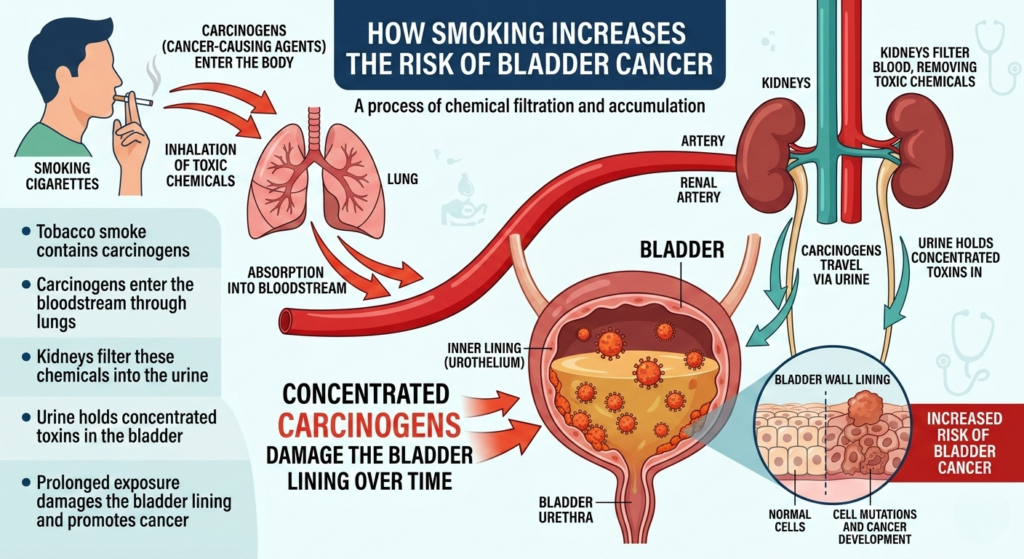
Smoking is the single biggest risk factor for bladder cancer. Studies show that smokers are 2 to 3 times more likely to develop bladder cancer compared to non-smokers.
How does smoking affect the bladder?
When you smoke, harmful chemicals from tobacco enter your bloodstream. These toxins are filtered by the kidneys and eventually stored in the bladder as urine. Over time, these chemicals damage the bladder lining, leading to cancer.
Some of the harmful substances include:
- Aromatic amines
- Polycyclic aromatic hydrocarbons (PAHs)
- Nitrosamines
These chemicals can cause mutations in bladder cells, increasing the risk of cancer.
Duration and Intensity of Smoking Matters
The risk of bladder cancer increases with:
- Number of cigarettes smoked per day
- Number of years of smoking
- Early age of starting smoking
Heavy smokers are at significantly higher risk than occasional smokers. However, even light smoking over a long period can be dangerous.
Patients visiting the best urologist in Agra are often surprised to learn that even past smoking habits can contribute to current health risks.
Secondhand Smoke and Bladder Cancer
It’s not just smokers who are at risk. Exposure to secondhand smoke can also increase the chances of developing bladder cancer.
People who live or work in environments with regular tobacco smoke exposure may unknowingly inhale harmful chemicals, putting their health at risk.
Benefits of Quitting Smoking
The good news is that quitting smoking can significantly reduce your risk of bladder cancer.
After quitting:
- The risk gradually decreases over time
- Bladder lining begins to repair itself
- Overall health improves
However, former smokers still carry a higher risk than those who have never smoked. This is why regular screening and medical check-ups are important.
Consulting the best urologist in Agra after quitting can help monitor your bladder health and detect any early warning signs.
Other Risk Factors to Consider
While smoking is the leading cause, other factors can also increase the risk of bladder cancer:
- Exposure to industrial chemicals
- Chronic bladder infections
- Family history of cancer
- Increasing age (more common after 55)
- Male gender
When combined with smoking, these factors can significantly elevate the risk.
Early Detection is Key
Bladder cancer is highly treatable when detected early. Unfortunately, many patients ignore early symptoms like blood in urine, assuming it to be a minor issue.
Why early diagnosis matters:
- Higher chances of successful treatment
- Less invasive procedures
- Better long-term outcomes
Regular check-ups with the best urologist in Agra can help in early detection and effective management.
Prevention Tips
Preventing bladder cancer largely revolves around reducing exposure to harmful substances, especially tobacco.
Key preventive measures:
- Quit smoking immediately
- Avoid exposure to secondhand smoke
- Stay hydrated (flushes toxins from bladder)
- Maintain a healthy diet rich in fruits and vegetables
- Use protective gear if working with chemicals
These simple lifestyle changes can go a long way in protecting your bladder health.
Treatment Options for Bladder Cancer
If diagnosed early, bladder cancer can be treated effectively.
Common treatment methods:
- Surgery: Removal of cancerous tissue
- Intravesical therapy: Medication directly into the bladder
- Chemotherapy
- Immunotherapy
The choice of treatment depends on the stage and severity of the cancer. Consulting the best urologist in Agra ensures that you receive the most appropriate and advanced care.
When to See a Doctor
You should seek medical attention if you experience:
- Blood in urine (even once)
- Persistent urinary discomfort
- Frequent urination without cause
Ignoring these symptoms can delay diagnosis and worsen outcomes.
Conclusion
Smoking is a major and preventable risk factor for bladder cancer. The harmful chemicals in tobacco directly affect the bladder lining, increasing the chances of cancer development over time.
The most effective way to reduce your risk is to quit smoking and adopt a healthier lifestyle. Early detection and regular medical check-ups are equally important.
As the best urologist in Agra, I strongly encourage individuals to take proactive steps toward their health. Awareness, prevention, and timely treatment can save lives.
